
shopXchange · Used Item Resale
Designing a Safer Used-Goods Marketplace From a Napkin Sketch
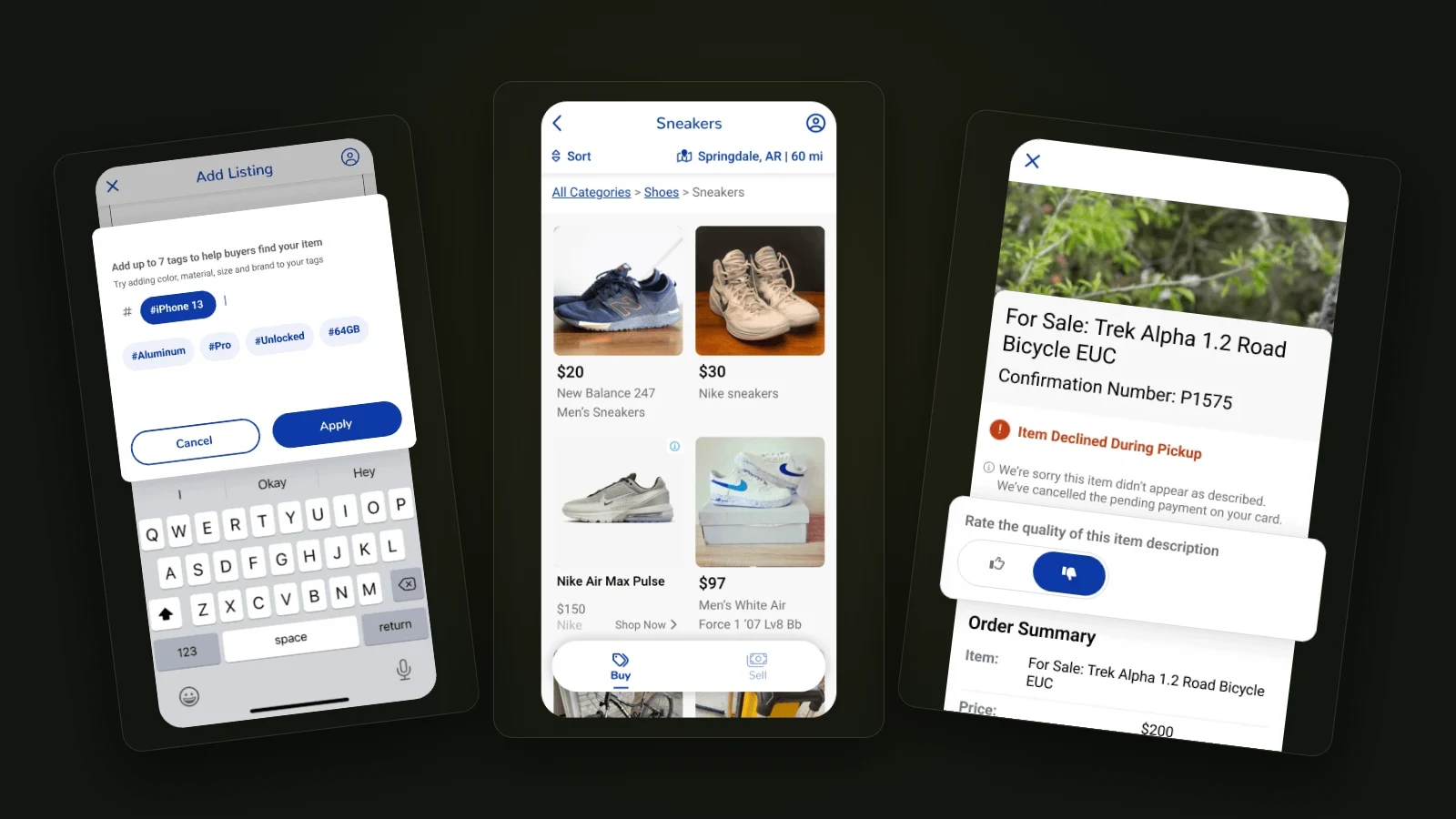
The client presented an idea that had briefly been hashed out in a discovery workshop. We were brought in to spearhead research, find product-market fit, further develop the idea, implement tasteful revenue models, and design the UX and UI.
The business model
Revenue streams. Commission on sales, split between the business and the "Xchange Site"; ad revenue, added later.
Key partners. Xchange Sites — local small businesses willing to facilitate trades within their storefront in exchange for a percentage of the sale, foot traffic, and an opportunity to advertise on the platform. Stripe handles payment processing.
Customers. Three segments emerged from the research:
- Occasional traders of used items who feel unsafe meeting strangers to negotiate and exchange goods. Typically waste-conscious, and would prefer not to donate items so they can make some money back.
- Side hustlers focused on making a few dollars alongside their regular occupation. Often "flip" furniture and other used household items found online, at thrift stores, or at garage sales.
- To a lesser degree, professional resellers who frequent eBay, Facebook Marketplace and Mercari in search of bargain collectibles and niche items. They value high-quality listing details and specifications, have usually had a bad trading experience, and are always looking for safer options that are fair to the seller.
Empathizing
Research with traders surfaced valuable insight: what traders expected to see when analyzing a deal, how far they were willing to travel, how long they expected to wait to drop off or pick up an item, and when and how they expected to pay or be paid. It also surfaced three challenges that had to be solved before launch.
Growing competition for no-meetup sales
Some users were already accustomed to no-contact methods for trading used items, with shipping available through Facebook Marketplace and — even more conveniently — Mercari, which facilitates local pickup and delivery via rideshare couriers. With established brands already in the market, we needed a compelling unique selling point.
The solution. A focus on anonymity and a lack of negotiation. Sellers save time and stress by not having to communicate with buyers, and traders retain their anonymity by using a username and not needing to meet the buyer themselves. We paired this with large-item sales through select Xchange Sites — an affordable, convenient, zero-interaction option for local used furniture and appliances.
Users were unsure about zero communication
Some users were uneasy with the idea of no communication at all with the other side of a deal. They saw the merit — many had experienced harassment, flakiness and inevitable haggling regardless of listing price — but couldn't shake the need to field questions when selling, and worried they would lose sales over missing details. Some also wanted to speak with a buyer to judge trustworthiness.
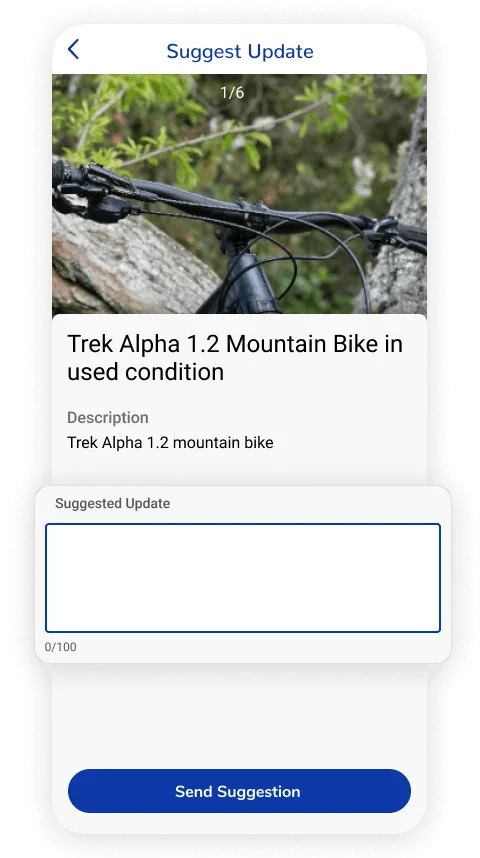
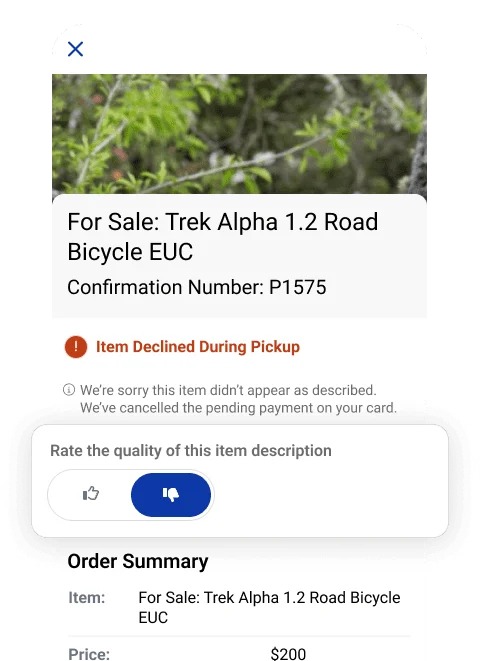
The solution. We landed on letting buyers anonymously "suggest an edit" to a listing through an open text field, configured to disallow phone numbers and email addresses. Sellers would be notified of the suggested edit and have an opportunity to change their listing. We paired this with a "description quality" review system — a simple thumbs-up or thumbs-down on the quality of a seller's description and imagery — alongside a visible count of how many times a seller had failed to drop off an item.
Low revenue projections at launch
The revenue stream wasn't going to be significant enough to support ongoing development of the product in the short term, and the MVP budget was wearing thin. We needed to pivot to implement an additional revenue stream that wouldn't impact user experience.
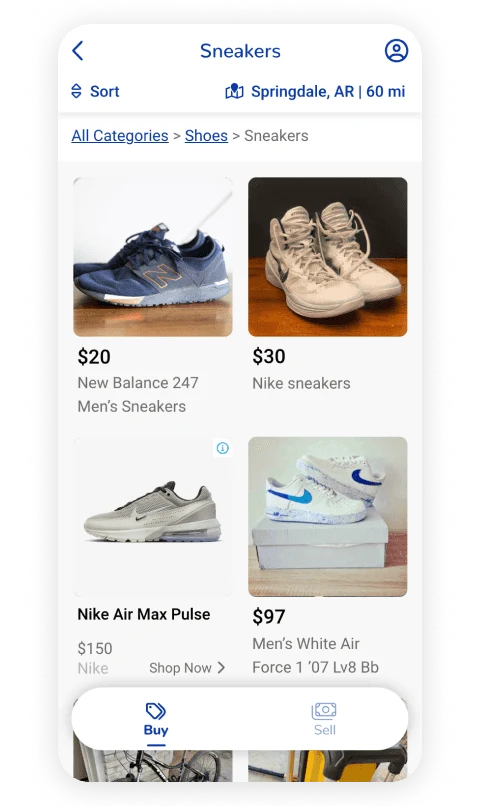
The solution. We planned to integrate Google Ad Manager into the app — changing from allowing Xchange Sites to have free ads in perpetuity through the platform, to linking out to run ads through Google Ad Manager as a direct sale. This would also enable us to expand our reach and allow a broad range of advertisers to make the most of our audience via Google's Ad Network and Ad Marketplace solutions.
No time or budget for item cataloguing
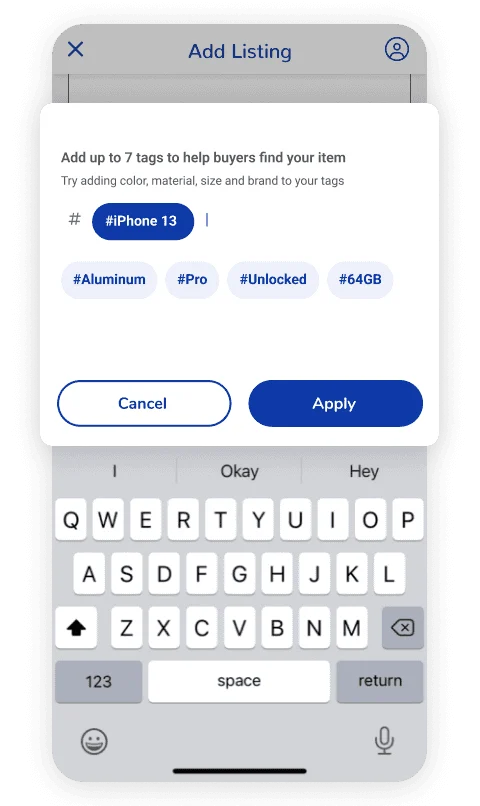
Since support would be a challenge in the short term after launch, we needed a simple DIY solution for users to organize and filter items past category, subcategory and description. We also wanted users to be able to help us define further subcategories for the future.
The solution — a tagging feature. We decided to implement a tagging system on top of the categories and sub-categories we had aggregated from competitors, watching popular tags over time and developing specification attributes as needed.
Feedback is key
By keeping a close relationship between design and development throughout the design process, we were able to pivot to make adjustments and compromises for better development efficiency. Working this closely saved us time in development and meant we could spend more time on additional features and development of the roadmap.
shopXchange launched in January 2024 in the Fort Smith Metro area.
Have a bottleneck like this one?
We calculate the financial payback before we write any code. If we can’t prove it will pay for itself, we won’t build it.